
How to Run an Influencer Marketing Campaign in India

To run an influencer marketing campaign in India, define one clear business objective, set a realistic budget, pick the creator tier that matches the objective, vet creators on engagement and audience authenticity rather than follower count, write a brief that protects creative freedom while covering ASCI disclosure requirements, contract properly, amplify the best-performing content as paid media, and measure against your original objective rather than reach alone. India's influencer industry is projected to reach roughly ₹3,375 crore by 2026, but regulatory scrutiny has scaled alongside it, so compliance is now part of campaign design rather than an afterthought. Here is the full process, step by step.
What this piece covers
How to set a campaign objective that actually shapes the work
The four types of influencers and which one your objective needs
What an influencer campaign costs in India, by tier and by month
Vetting creators properly, including the fake-audience checks
Writing a brief that gets great content and keeps you compliant
ASCI and CCPA rules every Indian campaign must follow in 2026
Amplification, measurement, and the mistakes that waste budget

How do you set the right objective for an influencer campaign?
Most campaigns fail before a single creator is contacted, because the objective was never sharp enough to guide any decision that followed.
Start with the business problem, not the deliverable
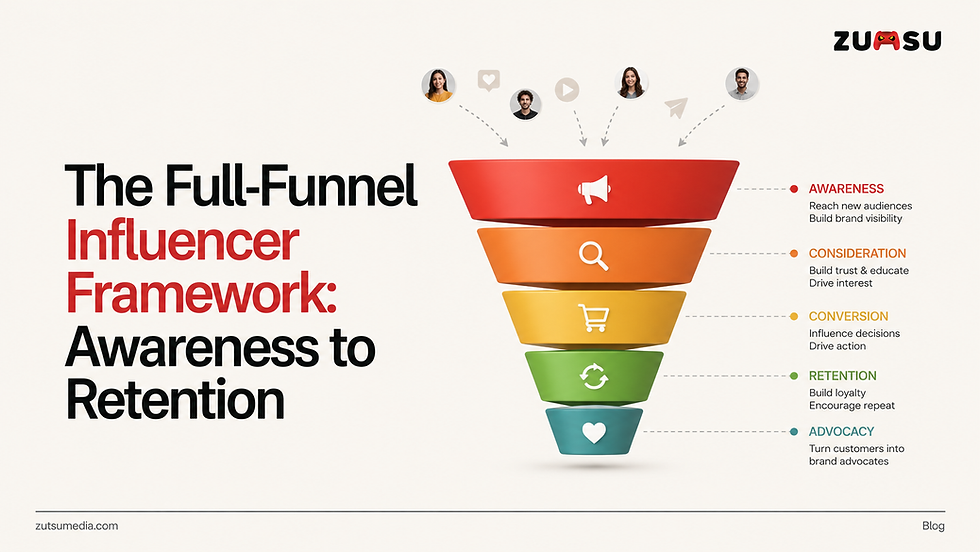
The common pattern in India is that a brief goes out asking for fifteen creators and a fortnight of posts, a report comes back with reach and engagement numbers, and nobody can say whether the business moved. That is influencer marketing run tactically: it produces activity and reports rather than outcomes. The better starting point is diagnosing the actual gap. Are people unaware of you, aware but unconvinced, convinced but not converting, or converting once and never returning? Each answer points to a different creator tier, content format, and success metric. A campaign built to fix a consideration problem looks nothing like one built for launch awareness, and knowing which you are solving prevents you from buying reach when you needed credibility.
Match the objective to tier and format
Once the objective is clear, the campaign shape follows naturally. Awareness goals justify larger creators and higher-reach formats, because you are buying eyeballs. Consideration and trust goals point to micro and mid-tier creators whose audiences actually listen, since engagement matters more than raw reach. Conversion goals favour creators with proven commerce pull, affiliate or code-driven tracking, and formats like demos and reviews rather than glossy brand films. Content generation goals, where you mainly need a library of authentic assets, are best served by many nano and micro creators at low cost. Choosing between reach and resonance is the central decision, and our breakdown of micro versus macro influencers and which actually converts covers that trade-off in depth.
Define success metrics before launch
Agree what you will measure before anyone posts, because retrofitting metrics is how campaigns get declared successful without evidence. If the objective is awareness, track reach, view-through, and lift in branded search. If it is consideration, track engagement quality, saves, comments, and site visits. If it is conversion, track code redemptions, affiliate links, and assisted sales. If it is content, track the volume and usability of assets produced. Set benchmarks from your own past campaigns where possible rather than industry averages, and decide upfront what result would make you repeat or kill the approach. This single discipline separates programs that compound from those that restart from zero every quarter.
What are the four types of influencers in India?
Creator tiers are the vocabulary of the whole category, and picking the wrong one is the most common and most expensive early mistake.
Nano, micro, macro and mega: the four tiers explained
Influencers in India are usually sorted into four tiers by audience size. Nano influencers have roughly 1,000 to 10,000 followers, carry the highest engagement rates in the market, and work best deployed in volume for product trial, user-generated content, and hyperlocal reach. Micro influencers sit between 10,000 and 100,000 followers and are the strongest return tier for most brand campaigns, combining a specific niche audience with content that still reads as personal. Macro influencers run from 100,000 to a million followers and deliver broad reach with credibility intact, which suits launches and category awareness. Mega and celebrity influencers cross a million followers and are bought for national scale, brand repositioning, and the association value a famous face carries. Most effective Indian campaigns use a mix rather than betting on a single tier.
Is 10,000 followers enough to be an influencer?
Yes, and in commercial terms a 10,000-follower creator is often a more sensible buy than someone ten times larger. Ten thousand is the conventional line between nano and micro, and it is the point at which most creators begin charging structured rates and platforms unlock features that matter to brands. What actually determines whether someone is worth working with is engagement quality, audience relevance, and whether their community treats their recommendations as credible. A creator with 12,000 highly engaged followers in a single niche will frequently outperform a 200,000-follower generalist on cost per conversion, because the audience overlap with your buyer is far tighter. Follower count sets the price band. It does not set the value.
The five niches that dominate Indian influencer marketing
Five categories account for the bulk of Indian creator activity and brand spend: beauty and personal care, fashion and lifestyle, food and beverage, technology and finance, and gaming. Beauty and fashion carry the deepest creator supply and the highest competition for attention. Food creators drive unusually strong local and discovery behaviour. Tech and finance creators command higher rates because their audiences are researching a considered purchase, and their content ranks and lasts on YouTube. Gaming is the youngest and fastest-moving of the five, with community norms that punish inauthentic brand entry harder than any other category, as our overview of India's top gaming content creators sets out. Regional and vernacular creators cut across all five and are where most of the cost efficiency currently sits.
How much does an influencer marketing campaign cost in India?
Budget decides scope, so set it honestly before you fall in love with a creator list.
What influencers charge in India, by tier
Indian creator rates run roughly ₹2,000 to ₹10,000 per deliverable for nano influencers, ₹10,000 to ₹1,00,000 for micro influencers, and ₹1,00,000 to ₹10,00,000 for macro creators, with mega and celebrity partnerships negotiated case by case. Those bands move significantly with platform, category, deliverable format, and usage rights. A produced reel costs multiples of a static post. Exclusivity, which locks a creator out of your competitor set for a defined period, carries a premium. Finance and technology creators typically price above lifestyle creators at the same follower count because their audiences convert differently. Our full influencer marketing cost guide for India breaks the bands down platform by platform, and what influencers charge for sponsored posts covers format-level pricing.
What does a 50,000-follower creator earn in India?
A creator with 50,000 followers sits in the upper micro band and would typically quote somewhere between ₹25,000 and ₹75,000 for a single Instagram reel, with static posts and story sets priced lower and YouTube integrations priced considerably higher. The spread is wide because category matters more than count at this level. A finance or technology creator at 50,000 followers can command rates a lifestyle creator at the same size cannot, because their audience is closer to a purchase decision. Engagement rate, past brand performance, and whether the deal includes usage rights or exclusivity all move the number materially. Treat any single published figure as a starting point for negotiation, not a rate card.
Set a realistic monthly program budget
A starter influencer program in India realistically needs ₹1.5 to ₹3 lakh a month to work, funding roughly eight to fifteen activations built mostly on nano and micro creators for seeding, awareness, and content generation. A growth-stage program runs ₹4 to ₹10 lakh a month and supports twenty to forty activations across mixed tiers and platforms. Below about ₹1.5 lakh a month, discovery and management overhead consume most of the value, so a tight handful of creators executed well beats a thin spread. Budget by program rather than by campaign wherever you can, because the channel rewards continuity and punishes stop-start activity.
Split the budget across creators, content rights, and paid
A common budgeting mistake is spending everything on creator fees and leaving nothing for the two things that multiply their value. Allocate for usage rights so you can reuse the content on your own channels and in ads, because retrofitting rights later almost always costs more. Then hold back a meaningful share for paid amplification, since putting media behind a creator post that is already performing organically is one of the highest-return moves available. Many Indian D2C brands now run a dedicated whitelisting budget alongside creator fees. Treat creator fees, rights, and amplification as three separate lines from the start rather than discovering the last two after the money is gone.
Choose platforms by where your buyers actually are
Platform choice should follow audience behaviour, not habit. Instagram Reels and YouTube Shorts lead for short-form reach and remain the default for most consumer categories. YouTube long-form costs more per asset but sells trust for considered purchases in tech, finance, and education, because the content ranks, lasts, and reaches people actively researching. Regional platforms and vernacular creators unlock Tier 2 and Tier 3 audiences where a lot of India's new buying power sits, often at lower rates with unusually high trust. For most national brands, a mix beats a single-platform bet, and allocating deliberately to regional creators is one of the smartest efficiency moves available in 2026.
How do you find and vet the right creators?
Vetting is where budgets are protected or wasted, and follower count is the least useful signal available.
Look past follower count to engagement quality
A creator with 20,000 genuinely engaged followers frequently outperforms one with 80,000 passive ones, so evaluate engagement rate, not audience size. Look at the ratio of comments and saves to followers, and read the comments themselves: real communities have specific, conversational replies, while inflated accounts attract generic emoji spam. Check whether recent sponsored posts performed anywhere near the creator's organic content, because a steep drop signals an audience that tunes out branded work. Ask for recent sponsored-post performance rather than cherry-picked best numbers. The step-by-step evaluation process is covered in our playbook for choosing the right influencer for your brand.
Run the authenticity and brand-safety checks
Two checks prevent most expensive mistakes. First, audience authenticity: request audience demographics and look for implausible patterns such as follower spikes, audiences concentrated in countries irrelevant to your market, or engagement wildly out of step with follower count, all of which point to purchased followers. Second, brand safety: review the creator's past content and past brand partnerships for anything that conflicts with your values, and check whether they are currently promoting a direct competitor. A creator juggling five rival brands dilutes your message to nothing. Both checks take an hour and routinely save lakhs, which is why professional influencer marketing programs build them into standard process rather than treating them as optional diligence.
Why does Gen Z trust influencers more than brands?
Gen Z grew up with advertising as ambient noise and developed an unusually fast filter for it, which is exactly why creator recommendations still land. A creator has a persistent identity, a track record their audience can scroll back through, and a reputation that costs them something if they recommend badly. A brand advertisement has none of that. The trust is parasocial but it is not irrational: audiences are reading consistency over time as a credibility signal, and they punish creators who break it. This is also why over-scripted content underperforms so reliably. The moment a creator sounds like a brand, the audience reclassifies the content as an advertisement and applies the same filter they use everywhere else.
Prioritise genuine brand fit over convenience
The most underrated selection criterion is whether the creator's audience is actually a plausible buyer of your product, and whether the creator can talk about it without sounding rented. A fitness creator promoting a fintech app might reach a big audience and convert almost none of it. Look for creators who already discuss your category, whose tone matches your brand, and who can hold a genuine point of view rather than reading a script. The content that performs in India consistently feels like a person recommending something to their community, not an ad wearing a creator's face. Fit is also what makes ongoing relationships worth building, since repeat collaborations with a well-fitted creator compound trust in a way one-off deals never do.
What should an influencer brief actually contain?
The brief is the single biggest lever on content quality, and in India it is also your compliance shield.
Give direction on message, freedom on execution
The best briefs are tight on what must be communicated and loose on how. Specify the core message, the two or three points that must land, the mandatory inclusions, the format and length, the timeline, and the call to action. Then leave the creative execution to the creator, because they know what their audience responds to far better than your brand team does. Over-scripted content is the most reliable way to make a campaign feel like an ad and underperform. The brief should also state deliverables precisely, how many posts, stories, or videos, how many revision rounds are included, and what the approval process is, so expectations are shared before work begins.
Cover claims, substantiation, and prohibitions
This is the part most brands skip and later regret, and in 2026 it is the part regulators are actively looking at. Every partnership brief should specify the exact disclosure language required, the claims a creator may make and the substantiation behind them, the claims they may not make, prohibited topics, and any required hashtags. This matters enormously in health-adjacent and personal care categories, where first-person efficacy claims in a creator's caption become the brand's problem. A documented brief is also proof of due diligence if a complaint is ever raised, which is real protection rather than paperwork.
Build the content calendar and approval flow
Sequence matters as much as content. Decide whether creators post simultaneously for a burst of visibility or staggered for sustained presence, and align posting with your wider marketing moments so the campaign reinforces rather than competes with other activity. Set clear approval windows that respect creator timelines, since last-minute change requests degrade content quality and damage relationships. Agree on how content will be shared for review, how quickly feedback will come back, and who has final sign-off. Campaigns that fall apart operationally usually do so here, in the gap between a creator waiting for approval and a brand team that has not assigned ownership.
What are the ASCI and legal rules for influencer campaigns in India?
Compliance in India is now enforceable with real financial penalties, and the nature of the risk has shifted.
The core ASCI disclosure requirements
ASCI's influencer guidelines require clear, upfront disclosure of any material connection between a creator and a brand. In practice that means disclosure appears in the first two lines of a caption, not buried below the fold, and for video content a verbal disclosure within the opening seconds alongside on-screen text. Live streams require repeated disclosure rather than a single mention at the start. The guidelines explicitly prohibit hiding disclosures inside hashtag clusters at the end of a caption, using ambiguous terms like #collab or #partnership without #Ad, and placing labels anywhere a user must scroll or click to see them. The rules also extend to AI-generated virtual influencers, a fast-growing category in India.
The risk has moved beyond missing disclosure labels
ASCI's Annual Complaints Report for April 2025 to March 2026 processed 1,609 influencer advertisements, of which 97.3% required modification. The more important finding for brands is what those violations were about. ASCI reported that disclosure failure is no longer the dominant concern: 54% of influencer violations involved product categories where advertising is disallowed or restricted by law, with offshore betting and alcohol leading, and 869 influencers found promoting prohibited products. Illegal betting accounted for 54% of flagged cases, personal care 16.9%, and electronics and consumer durables 7.9%. In personal care specifically, creators were flagged for unsubstantiated first-person efficacy claims. A separate ASCI review of the Forbes India Top 100 Digital Stars found 76% in violation in 2025, up from 69% the previous year.
CCPA penalties make this a financial risk
Disclosure is not a self-regulatory nicety. The Consumer Protection Act backs these standards with legal force, and the CCPA can impose penalties of up to ₹10 lakh on individuals and ₹50 lakh on entities for misleading advertisements, along with cease-and-desist orders. ASCI has characterised the current digital advertising environment as a speed-first, compliance-later culture in which correcting a post after publication has become normalised as a compliance practice. That is a poor position for a brand to be in, because the correction happens after the reputational exposure, not before it. Build compliance into the workflow instead: required disclosure language in every brief, pre-publication content review that specifically checks placement and claims, substantiation on file for every efficacy claim, approval records retained, and a quarterly audit of the last ninety days of content. If you are whitelisting creator content as paid ads, use the platform's official branded content tools rather than running soft-disclosure ads that say "collab" and nothing more.
How do you amplify and measure the campaign?
The work does not end when creators post. What happens next usually determines the return.
Amplify what is already working
Organic creator reach is capped by their follower base, so the highest-return move is putting paid budget behind the posts that are already performing. Whitelisting, running creator content as an ad from their handle, consistently outperforms brand-account advertising because it retains the authenticity of a real person while reaching far beyond their followers. Identify the top performers a few days in, then amplify those rather than spreading budget evenly. This is where influencer work and performance marketing genuinely converge, and treating them as one connected system rather than separate line items is what turns a good campaign into a scalable channel.
Measure against the objective, not vanity metrics
Reach and impressions are the easiest numbers to report and the least informative. Measure against whatever you defined at the start: branded search lift and view-through for awareness, engagement quality and site behaviour for consideration, code and affiliate performance for conversion, asset volume and usability for content goals. Track cost per engaged view rather than cost per post, since that is what reveals whether a creator was fairly priced. Compare creators against each other to learn which profiles and formats work for your category. The point of measurement is not to prove the campaign worked, it is to know what to repeat and what to stop.
Turn campaigns into relationships
The biggest structural mistake in Indian influencer marketing is treating every campaign as a fresh start. Creators who work with a brand repeatedly produce better content, need less briefing, negotiate more favourably, and their audiences begin to believe the association because it is consistent rather than one-off. Building a roster of trusted creators over time is how the channel compounds, and it is precisely what structured creator and talent management is designed to deliver. Some of the strongest Indian work of recent years came from sustained partnerships rather than single bursts, a pattern visible across the biggest influencer marketing campaigns in India that actually worked.
Where an agency fits, and when you need one
Running one campaign in-house is manageable. Running a program is a different job.
What an agency actually takes off your plate
The operational load in influencer marketing is heavier than it looks from outside: creator discovery and vetting at volume, rate negotiation across dozens of individual counterparties, contracting with usage and exclusivity terms, briefing, content review against compliance requirements, go-live coordination, payment processing and tax documentation, and reporting. A brand team running this alongside everything else usually ends up doing the discovery well and the contracting and compliance badly. If you are evaluating partners, our guide to the top influencer marketing agencies in Mumbai sets out what different agency models are actually good at.
Connect influencer work to the rest of your marketing
Influencer campaigns perform best when they are not isolated. Earned coverage gives a campaign third-party credibility that creator content alone cannot, which is why PR and creator activity are increasingly planned together. Paid amplification extends the reach of what works. And where a campaign needs national scale rather than niche depth, a structured celebrity endorsement may be the more efficient instrument, though the selection discipline is different, as our guide to choosing the right celebrity for a brand endorsement explains. Zutsu Media runs all of these under one team, which is the point: one brief, one plan, one set of numbers at the end. More of our writing on the category sits in our influencer marketing archive.
Frequently asked questions
Q) How do you run a successful influencer marketing campaign?
Define one clear business objective, set a realistic budget of at least ₹1.5 to ₹3 lakh a month for a starter program, choose the creator tier that matches the objective rather than the largest you can afford, vet creators on engagement quality and audience authenticity, write a brief that covers message, claims, and ASCI disclosure, contract properly including usage rights, amplify the best-performing content as paid media, and measure against the objective you set at the start. Campaigns that skip the first and last of those steps are the ones that produce reports instead of results.
Q) What are the four types of influencers?
Nano influencers have roughly 1,000 to 10,000 followers and deliver the highest engagement, best used in volume for trial and user-generated content. Micro influencers have 10,000 to 100,000 followers and generally offer the strongest cost per conversion. Macro influencers have 100,000 to a million followers and suit launches and category awareness. Mega and celebrity influencers exceed a million followers and are bought for national scale and association value. Most effective campaigns combine tiers rather than relying on one.
Q) How much does an influencer marketing campaign cost in India?
Rates run roughly ₹2,000 to ₹10,000 per deliverable for nano creators, ₹10,000 to ₹1,00,000 for micro creators, and ₹1,00,000 to ₹10,00,000 for macro creators, with celebrity partnerships negotiated case by case. A functioning monthly program starts around ₹1.5 to ₹3 lakh and scales to ₹4 to ₹10 lakh at growth stage. Agency management fees are quoted separately from creator fees, and usage rights and exclusivity both carry a premium on top of the base rate.
Q) What are the ASCI rules for influencer marketing in India?
ASCI requires clear disclosure of any paid or material connection at the start of content, meaning within the first two lines of a caption and verbally within the opening seconds of video, with repeated disclosure during live streams. Hiding disclosure in hashtag clusters, using #collab or #partnership without #Ad, and placing labels behind a scroll or click are all prohibited. The rules also cover AI-generated virtual influencers, and creators may not make efficacy claims without substantiation held by the brand.
Q) What happens if an influencer campaign does not comply with ASCI?
ASCI can require modification and publicly name violators, and because the Consumer Protection Act backs these standards, the CCPA can impose penalties of up to ₹10 lakh on individuals and ₹50 lakh on entities for misleading advertisements, plus cease-and-desist orders. In ASCI's 2025-26 annual report, 97.3% of the 1,609 influencer advertisements processed required modification, and over half involved categories where advertising is legally restricted. Brands carry reputational exposure alongside the regulatory risk.
Q) Is 10,000 followers enough to be an influencer?
Yes. Ten thousand followers is the conventional threshold between nano and micro, and creators at this level frequently outperform much larger accounts on cost per conversion because their audience is tighter and their community treats their recommendations as credible. What matters commercially is engagement quality and audience relevance to your category, not the raw number.
Q) How long should an influencer marketing campaign run?
A single burst campaign typically runs two to four weeks, but influencer marketing works best as an ongoing program rather than isolated bursts. Sustained activity across months lets you learn which creators and formats convert, build repeat relationships that improve content quality and pricing, and compound audience familiarity. Brands that restart from zero each quarter consistently underperform those running continuous programs.
Q) Should you use one big influencer or many small ones?
For most Indian brands, several micro and mid-tier creators outperform one large name, because engagement rates are higher, costs are lower, and the content feels more credible. Larger creators make sense when the objective is broad awareness or a launch moment that needs scale. The right answer depends on whether you are buying reach or resonance, which is why the objective must be set before the creator list.
Q) Which is the number one influencer marketing agency in India?
There is no single number one, and any agency claiming the title is selling rather than advising. Indian agencies split roughly into technology-led creator platforms optimised for volume, specialist influencer boutiques with deep category networks, and full-service marketing agencies that run influencer work alongside PR and paid media. The right choice depends on your category, campaign scale, and whether you need standalone execution or integrated delivery.
The Bottom Line
Running an influencer marketing campaign in India well is a system, not a shopping exercise. Define the business problem before the deliverable, choose the creator tier the objective actually calls for, budget across creator fees, usage rights, and amplification rather than fees alone, and vet creators on engagement and authenticity instead of follower count. Write briefs that give creative freedom while locking down claims and disclosure, because in 2026 the regulatory risk sits as much in unsubstantiated claims and restricted categories as it does in a missing #Ad label. Then amplify what works, measure against your original objective, and turn the best creators into long-term partners rather than one-off transactions.
If you want influencer campaigns that are strategically built, ASCI-compliant, and measured against real business outcomes, talk to Zutsu Media and we will design a program around your category and budget.
Zutsu Media is a 360 degree marketing and production agency headquartered in Mumbai, working with brands across India and the APAC region across 18 plus industries.

Comments