
How to Choose the Right Influencer for Your Brand in India (2026 Playbook)

Updated: May 15
Most influencer campaigns in India fail before a single post goes live. Not because the influencer was bad. Not because the budget was wrong. They fail because the brand picked the wrong person for the job.

You see 80K followers, a decent engagement rate, a niche that feels close enough, and you sign the deal. Three weeks later you've spent ₹1.8 lakh and your sales dashboard hasn't moved a single rupee. Sound familiar? You're not alone and the problem isn't influencer marketing. The problem is how Indian brands are choosing influencers in 2026.
Here's the framework that actually works.
Step 1: Decide What You're Buying Awareness, Consideration, or Conversion
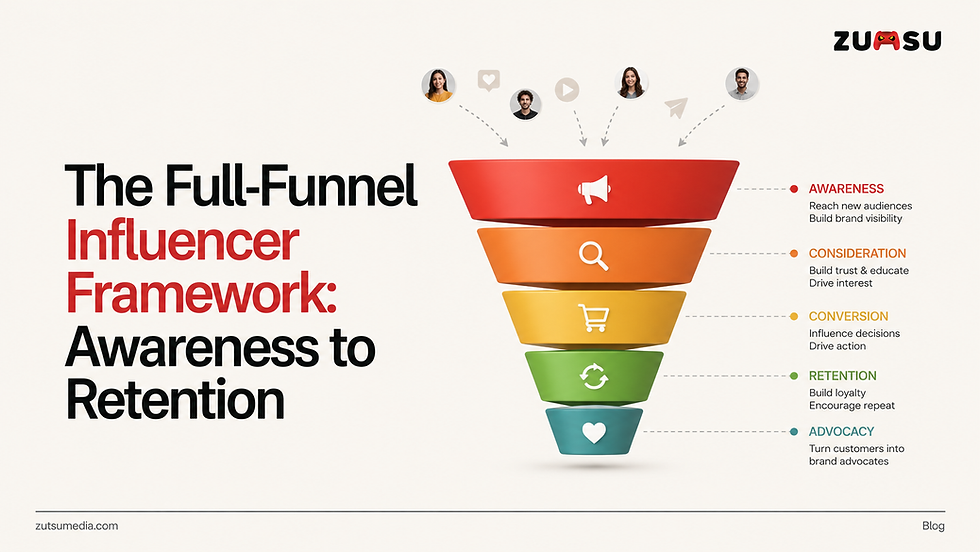
Influencer marketing campaigns in India do three jobs. Awareness (people learn you exist). Consideration (people start trusting you). Conversion (people actually buy). One creator rarely does all three well, and pretending otherwise is why budgets evaporate. A macro creator with 1M+ followers can blast you into the feed of new audiences at that point you're really looking at a celebrity or brand ambassador endorsement play, not a typical influencer campaign. A micro creator with 35K followers will outperform them 4-to-1 on actual purchase intent. If you don't know which problem you're solving, you'll buy the wrong tool. Lock this down before you message a single influencer.
Step 2: Audience Match Beats Niche Match Every Time
A fitness influencer doesn't automatically mean their audience buys fitness products. Many fitness creators have audiences full of other fitness creators chasing the same gigs. Look past the niche label and audit who actually watches them. Indian creators with 60%+ female audiences crush women-led D2C campaigns even when their content is "lifestyle" not "beauty." Indian creators with 70%+ Tier 2/3 city audiences quietly outperform Mumbai-Bangalore-heavy peers for FMCG and value-segment brands. Ask for audience demographics in writing. If they can't share it, walk away or work with a talent management agency that manages creators directly and can surface real audience data, not just screenshots.
Step 3: Read Engagement Quality, Not Engagement Rate
A 6% engagement rate looks great until you see that 80% of those comments are emojis from bot accounts. The real signals: comment-to-like ratio (above 1.5% is healthy), comment substance (real sentences, not "🔥🔥🔥"), and saves/shares relative to likes. Reels with high save rates indicate the audience finds the content actually useful which is exactly what you want when your brand is being recommended inside that content. This is the same audience-quality lens that performance marketing teams apply to paid media; the logic works identically for influencer selection.
Step 4: Check Their Last 3 Paid Posts, Not Their Organic Feed
Every creator looks great organically. Pull up their last three brand collaborations and check the engagement on those specifically. In 2026, the gap between organic and sponsored engagement is the single most useful selection signal in Indian influencer marketing. A creator whose paid content gets 60% of their organic engagement is a buy. One whose paid content drops to 15% is a red flag their audience doesn't trust their recommendations. Browse any credible creator roster and you'll see the difference immediately: managed creators with consistent brand performance vs unmanaged creators with wildly inconsistent outputs.
Step 5: Get the Deliverables in Writing Before You Transfer a Rupee
Indian influencer marketing in 2026 still runs on too many handshake deals and WhatsApp confirmations. Write the contract: number of posts, format, posting dates, usage rights window, disclosure language (ASCI-compliant non-negotiable now that CCPA backs ASCI with legal teeth), exclusivity period, and revisions allowed. If you're planning to repurpose the influencer's content across your commercial video production or paid ad campaigns, those usage rights need to be in the contract upfront not negotiated after the shoot. The brands losing the most money aren't paying too much per post. They're paying for deliverables they never received.
The Shortcut Most Brands Miss
The right influencer for your brand in India isn't the one with the biggest number. It's the one whose audience already looks like your buyer and who can produce content that converts that audience without making it look like an ad. The fastest way to shortcut the vetting process is to work with an agency that manages talent directly not a marketplace, but a management relationship where the agency knows every creator's real audience data, conversion history, and brief performance. That intel is worth more than any public metric. Build the selection framework first. The campaigns get easier from there.
FAQs
Q: How many followers should an influencer have for a brand campaign in India?
A: Follower count alone is a weak signal. Micro-influencers (10K–100K) deliver 3–5% engagement rates and stronger conversion than mega-influencers at 1.2% engagement. Match the tier to your goal awareness needs reach, conversion needs community trust.
Q: What's the best way to verify an influencer's audience quality in India?
A: Request audience demographic data directly (age, gender, city split). Use tools like HypeAuditor or Modash for follower authenticity audits. Or work with a talent management agency that already has verified backend analytics for their managed creators.
Q: How much should I pay an influencer for a brand deal in India in 2026?
A: Nano (under 10K): ₹5,000–₹25,000 per post. Micro (10K–100K): ₹25,000–₹2 lakh. Mid-tier (100K–500K): ₹2–₹8 lakh. Macro (500K–2M): ₹8–₹20 lakh. Rates vary by platform, format, and exclusivity terms.
Q: Should I use one big influencer or multiple smaller ones?
A: For most Indian D2C brands in 2026, a cluster of 10–15 micro-influencers outperforms one macro deal on both engagement and cost-per-acquisition. Use macro for launch moments and brand credibility; micro for sustained conversion work.
Looking to run influencer campaigns that actually convert? Zutsu Media runs end-to-end influencer marketing from creator selection to campaign execution across India and APAC.
Share

Comments